 (1).png "Depth of anesthesia and sedation monitor MGA-06")
 (1).png "Depth of anesthesia and sedation monitor MGA-06")
 (1).png "Depth of anesthesia and sedation monitor MGA-06")


 (1).png "Depth of anesthesia and sedation monitor MGA-06")
 (1).png "Depth of anesthesia and sedation monitor MGA-06")
 (1).png "Depth of anesthesia and sedation monitor MGA-06")
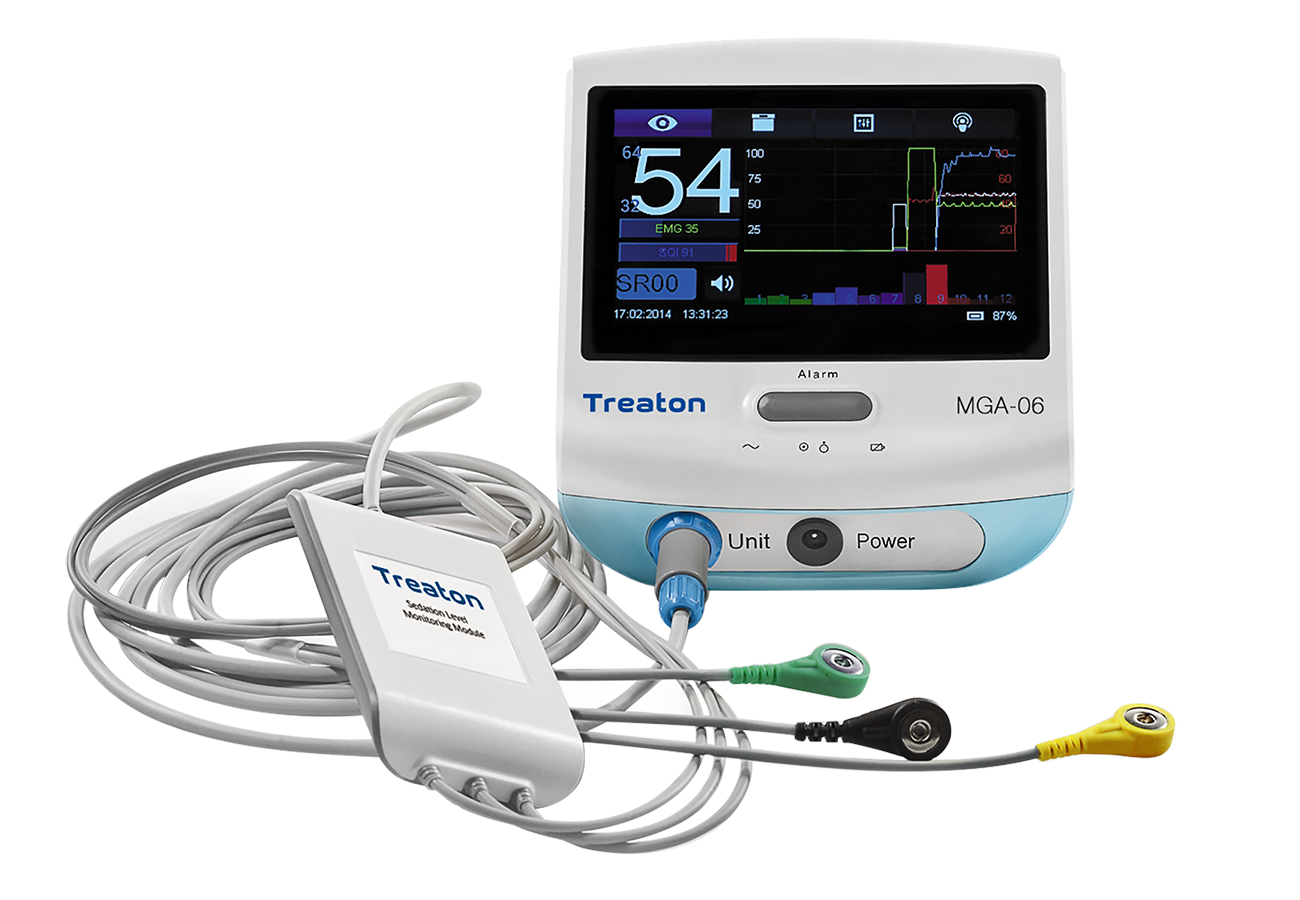
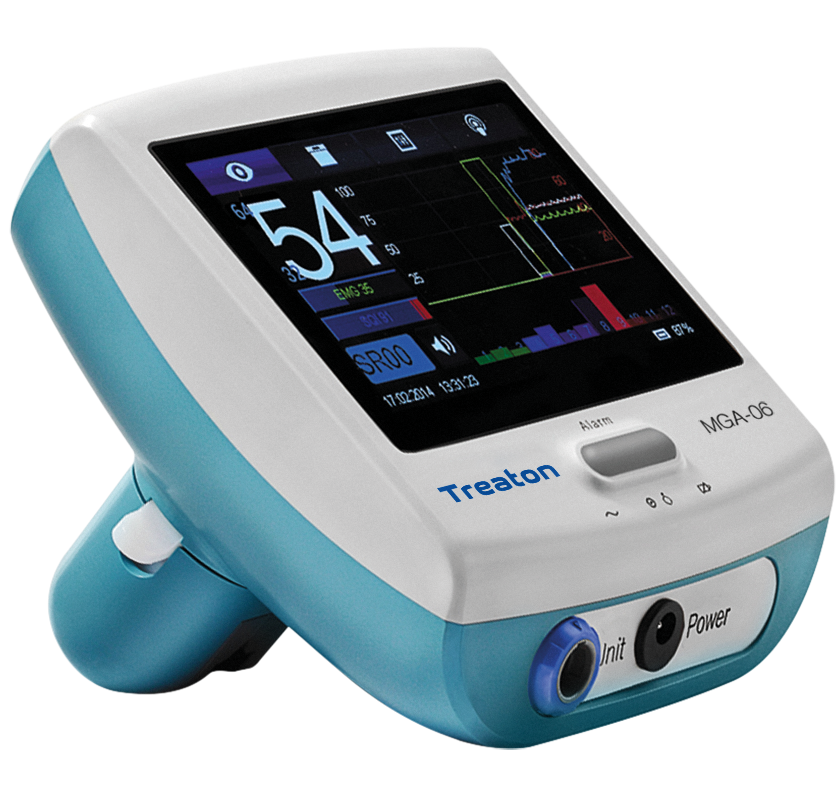
Depth of anesthesia and sedation monitor MGA-06 is a monitor assessing depth of anesthesia and designed to improve patient safety through long and continuous monitoring of the Brain Activity Index (AI).
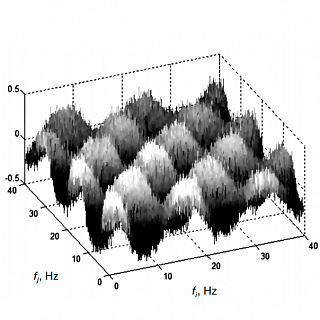
The algorithm of EEG analysis includes statistical information on typical signs of various groups of anesthetics’ impact on the patient’s EEG. In the analysis processing, the degrees of EEG correspondence to each type of suppression are determined. Taking these degrees into account allows to calculate the final indicator – the brain activity index (AI).
The purpose of using the technology is an objective evaluation of patient sedation for more precise anesthetic dosage by which anesthesia awareness can practically be avoided and recovery time can be reduced.
Patient groups: adults, children.
Identified parameters
| AI | Brain Activity Index |
Reflects the degree of depression of consciousness by analyzing the EEG taking into account information about typical signs of anesthetic effects on patients |
| SR |
EEG Signal Suppression Rate |
Reflects the suppression of EEG activity and determines level of the further deepening of anesthesia |
| SQI |
EEG Signal Quality Index |
Indicates the influence of cable electrodes impedance, artifacts, high-frequency noise, power mains disturbances |
| EMG |
Electromyographic Component Level |
Electrical activity of facial muscles |
Technical specification
|
Display
|
Touch screen TFT-display, 5” |
| Alarms | Visual and audible |
|
Mains supply |
100–240 V, 50/60 Hz |
| Built-in battery | 2000 mA·h, Ni-Mh, up to 2 h of operation |
| Trends |
AI (Brain Activity Index) EMG (Electromyographic component level) 72 hours |
| Dimensions |
150 x 140 x 105 mm |
| Weight | 0.8 kg |
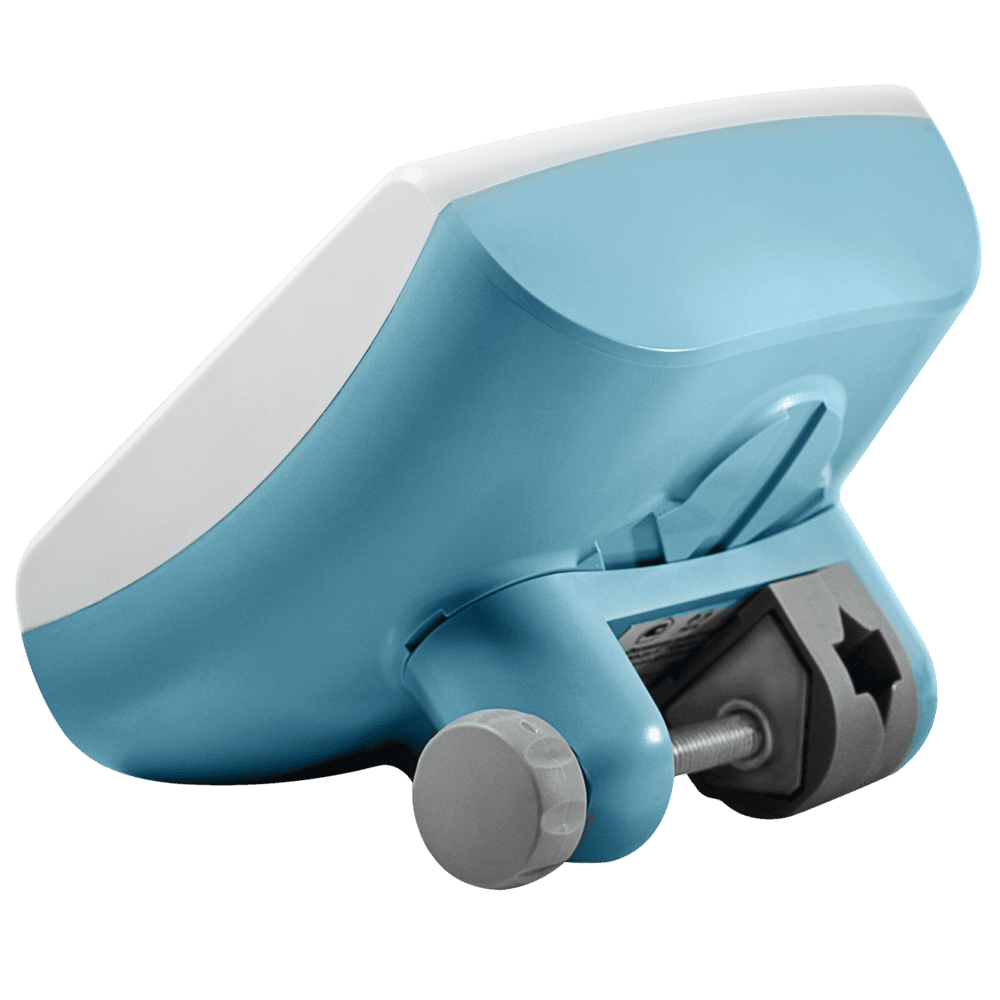
| Working surface | The device is portable and it can be placed on working surface or suspended and fixed at any surface near patient |
|
Connection |
Wi-Fi |
| Patient Information record | Name, age, gender, weight, height, date of admission, diagnosis at admission, clinical diagnosis, notes |
|
Recommended types of electrodes |
31.1245.21, 24 mm, Covidien LLC, USA; F9079/RU3236-100, FIAB SpA, Italy; White Sensor 40713, Ambu A/S, Denmark; MK-01/-02/-03, Medker Medical Electronic Tech Co, China |
Start-up delivery set / Quantity, pcs.
|
Electronic unit |
1 |
|
Depth of Anesthesia and Sedation Module |
1 |
| Power adapter | 1 |
| Electrodes, single use | 1 pack (100 pcs) |
Options
|
MGA Module compatible with BIS type EEG electrodes |
TESN 626002-04 |
|
MGA Module compatible with GE-Entropy type EEG electrodes |
TESN 626002-02 |
|
MGA Module compatible with any types of single use EEG electrodes |
TESN 626001-03 |
.jpg "04 (2).jpg")
Interpretation of AI Brain Activity Index data
|
Meaning AI |
Classical stages of ether anesthesia |
Clinical manifestations |
|
90–100 |
Staying awake |
|
| 80–90 | Stage I anesthesia — light sedation |
Incomplete wakefulness, opens eyes and holds visual contact in response to a voice within 10 seconds or less |
| 60–80 | Stage II anesthesia — sedation | Movement and opening of the eyes to the voice, but the gaze does not fix — the absence of eye contact, or there is no response to the voice, but the movements or opening of the eyes to physical stimulation are preserved. |
| 40–60 | Stage III anesthesia — surgery is possible | No response to voice or physical stimuli |
| 30–40 | Stage IV anesthesia — deep anesthesia, the appearance of BS patterns (flash suppression) | |
| 20–30 | Stage V anesthesia is a deepening of anesthesia compared to stage IV, the duration of episodes of suppression is up to 10 seconds. | |
| 10–20 | Stage VI of anesthesia is a deepening of anesthesia compared to stage V, the duration of episodes of suppression is usually more than 10 seconds. | |
| 0–10 | Stage VII, very deep anaesthesia, suppression episodes amounts to 75 % and more from all signal duration | |