
Evaluation of patient‘s metabolic needs
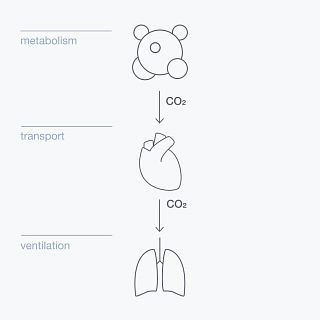
The peculiarity of patients in intensive care and resuscita tion units is metabolic insta bility caused by the severity of the condition, artificial lung ventilation, sedation, analgesia and extracorporeal detoxification methods. Therefore, metabolic monitoring for such patients is of great importance.
10 September 2025
APSF-Endorsed Statement on Revising Recommendations for Patient Monitoring During Anesthesia
Patient safety during general anesthesia requires maintaining organ perfusion and oxygenation. Achieving this goal requires that hemodynamics, ventilation, and oxygenation be monitored, and for the most part, existing monitoring statements from all of the professional organizations reviewed by the APSFCOT address this monitoring need.

1 June 2026
Bispectral Analysis of Electroencephalogram Using Neural Networks to Assess the Depth of Anesthesia
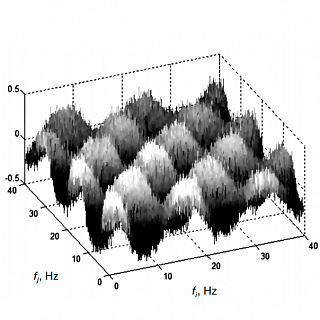
The article reviews algorithms of bispectral analysis of the electroencephalogram (EEG) signal of a patient to determine the level of brain activity during sedativeassisted treatment. The proposed algorithms are based on construction of multiple convolutions of complex amplitudes of the EEG signal, combined into socalled bispectra.
31 May 2026
Capnometry and volumetric capnometry (VCO2 + ETCO2)
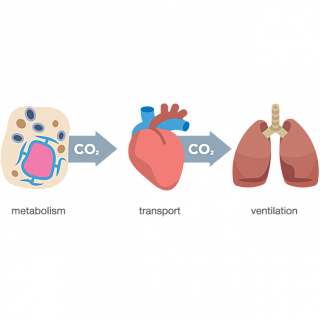
This monitoring method is recommended for use in intensive care units and operating rooms to improve patient safety. Capnography allows to assess the endotracheal tube location, the resuscitation effectiveness. This type of monitoring is necessary for patients with increased intracranial pressure.
1 December 2025
Auxiliary pressure Paux
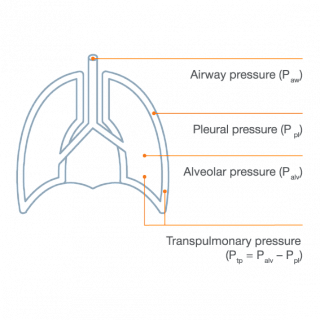
An auxiliary pressure channel allows to the health practitioner to obtain valuable practical information. The doctor can measure the pressure directly in the trachea and esophagus. The pressure in esophagus is equal to the intrapleural pressure.
2 August 2025
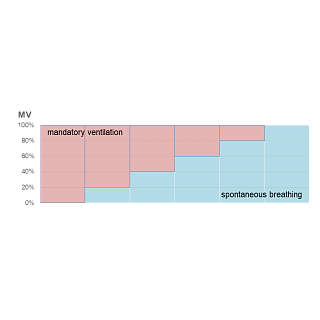
Intelligent Support Ventilation — iSV mode
The intelligent support ventilation (iSV) mode provides the target volume of minute ventilation at any level of patient‘s spontaneous respiratory activity. iSV automatically
adjusts the support pressure level in each respiratory cycle, depending on the changes in the parameters of the bronchopulmonary system. The parameters of iSV are determined extremely simply — by the patient‘s height and gender.
28 July 2025
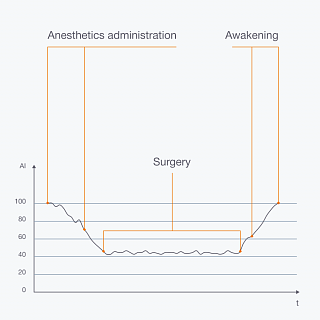
Interpreting AI (Brain Activity Index) data
According to a generally accepted classification of anesthesia stages.
1 May 2025
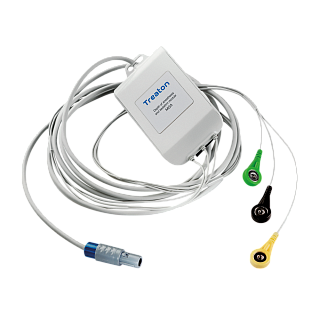
Depth of Anesthesia and Sedation Monitoring
MGA Depth of Anesthesia and Sedation Module is designed to provide long and continuous monitoring of the Brain Activity Index (AI).
Application: anesthesiology, including perioperative period, resuscitation, intensive care, procedural sedation.
Application: anesthesiology, including perioperative period, resuscitation, intensive care, procedural sedation.
25 March 2025
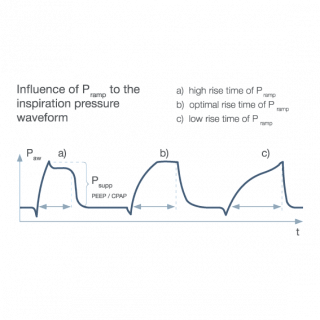
Extended Respiratory Monitoring
Extended respiratory monitoring allows to set comfortable and safe ventilation parameters in accordance with the respiratory needs of the patient.
13 January 2025
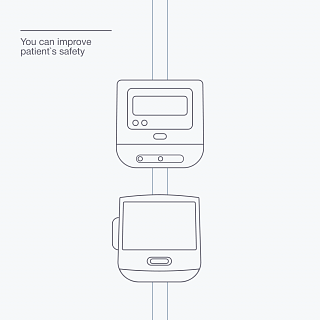
To improve patient`s safety
You can use Depth of anesthesia and sedation monitor MGA-06 with Multigas Analyzer AMG-06.
23 December 2024