
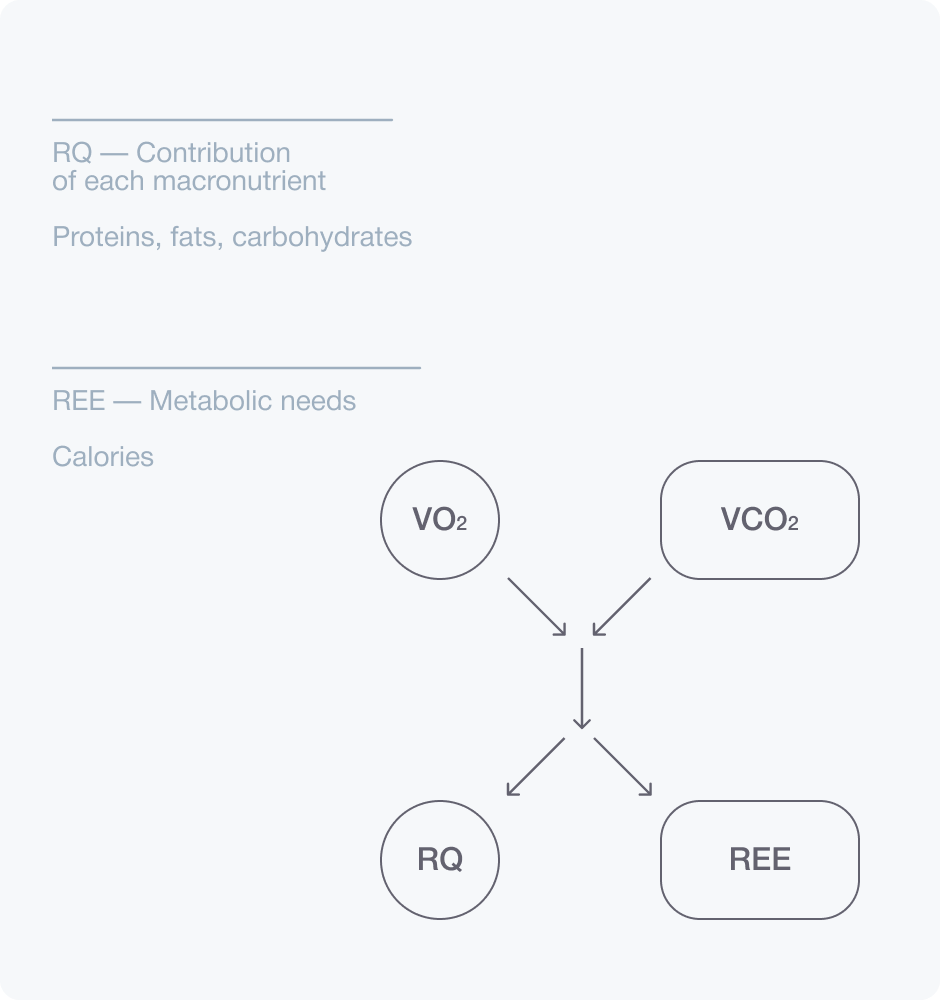
resting energy expenditure (REE), this method calculates the respiratory quotient (RQ) — the ratio of carbon dioxide release rate to oxygen consumption rate and assess the contribution of each macronutrient to the total metabolism. The built-in metabolic module is convenient and easy to use because requires minimal user effort.
The principle of the metabolic needs evaluation is based on measuring the volume of carbon dioxide released, the volume of oxygen absorbed and the subsequent calculation of energy costs using the Weir equation.
Experience has shown that the individualized program of nutritional support for 3–4 days of treatment in ICU using the metabolic module significantly reduces:
- frequency of nosocomial infections;
- consumption of antibacterial drugs;
- duration of artificial ventilation.
|
Parameters |
Empirical nutritional support (n = 36) |
Nutritional support using metabolic module (n = 74) |
| Frequency of pneumonia | 28% | 6.76% |
| Frequency of pressure sores | 25% | 10.8% |
(N. Sh. Gajieva — Candidate of Medical Sciences, Neuroresuscitator; I. N. Leiderman — MD, Professor; A. A. Belkin — MD, Professor. Intensive Therapy, 2008)
Metabolic monitoring is used in programmes of early and resuscitation rehabilitation of patients. Its use makes it possible to shorten the time of rehabilitation and minimize complications after suffering strokes, spinal cord injuries, brain injuries, muscular dystrophies, etc
Deficiency of calories in critical states can cause:
- postoperative wound suppuration, failure of anastomoses;
- dysfunction of the respiratory musculature and diaphragm;
- hospital-acquired infections (tracheobronchitis, VAP, etc.);
- high consumption of antibiotics;
- greater consumption of blood components (FFP, albumin);
- pressure sores, anemia;
- prolonged bed rest in ICU and inpatient department.
Excess calories in critical states lead to:
- hyperglycemia;
- growth of CO2 production;
- desynchronization with the ventilator;
- hyperthermia;
- aggravation of ALI / ARDS;
- fatty hepatosis.